The challenge
Choosing a book shouldn’t
give away the story.
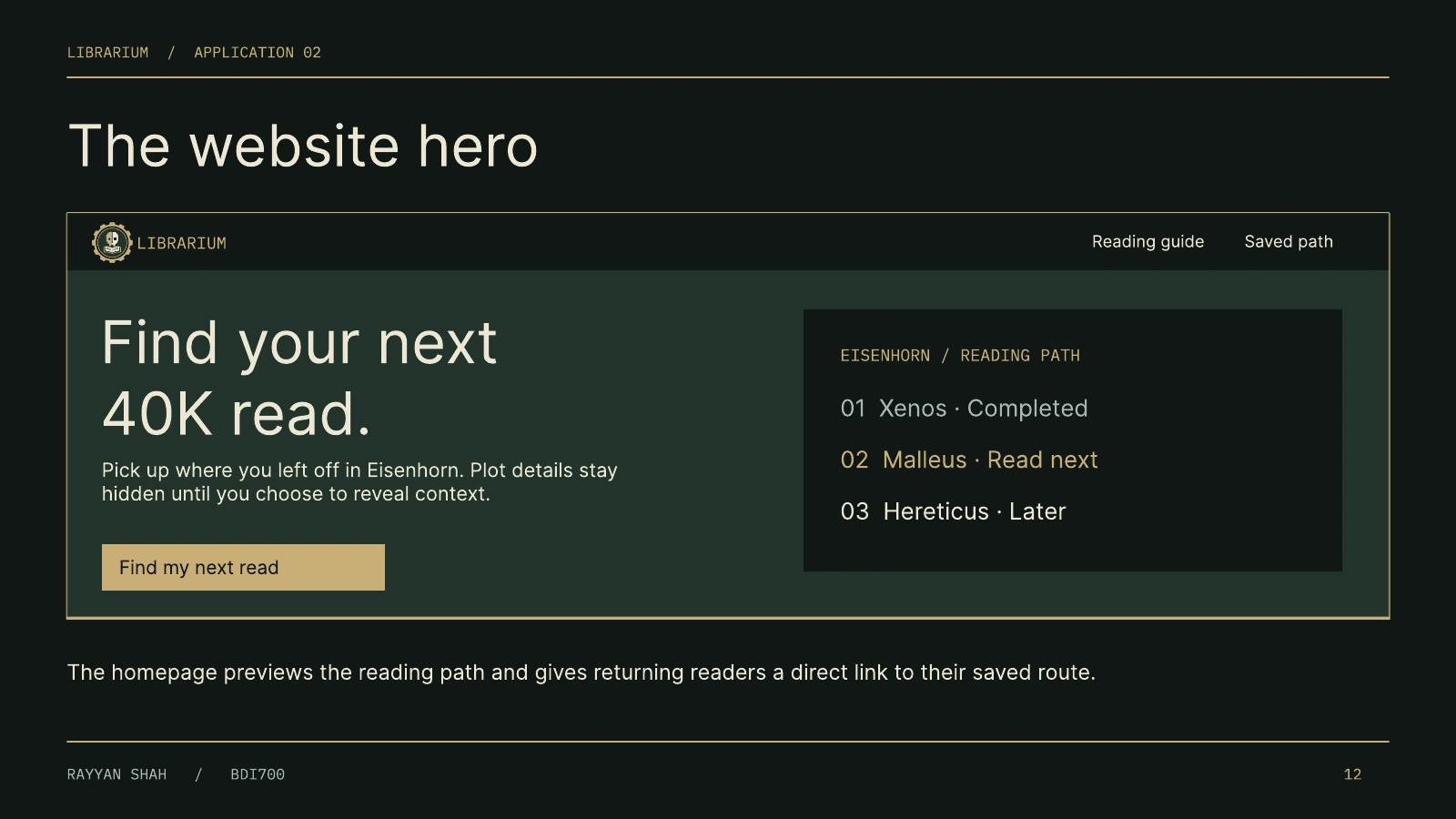
The project centres on a reader who has finished Xenos and wants to continue Eisenhorn. Reading-order lists and discussions can mix different series with context the reader would rather discover for themselves.
I narrowed the concept to one series and one next-book decision. This gave me a specific journey to design: show progress, recommend a next read, explain the choice, and save a path to return to.
The reader’s goal
Continue a series with confidence, without having to open a plot summary.
The design goal
Keep reading order visible, make additional context optional, and confirm what happens after saving.
A focused journey
Less scope.
More clarity.
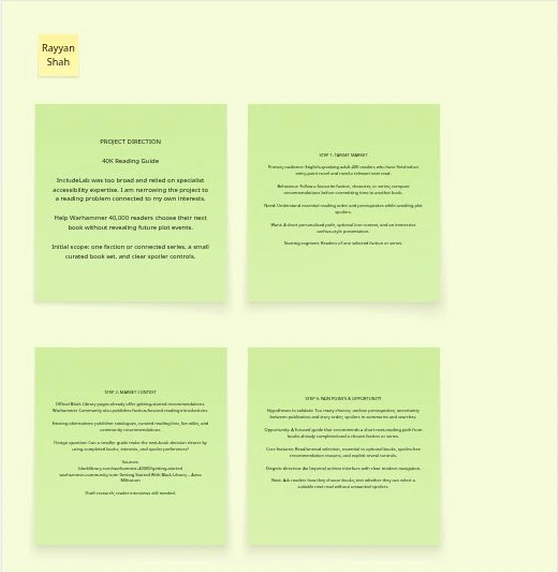
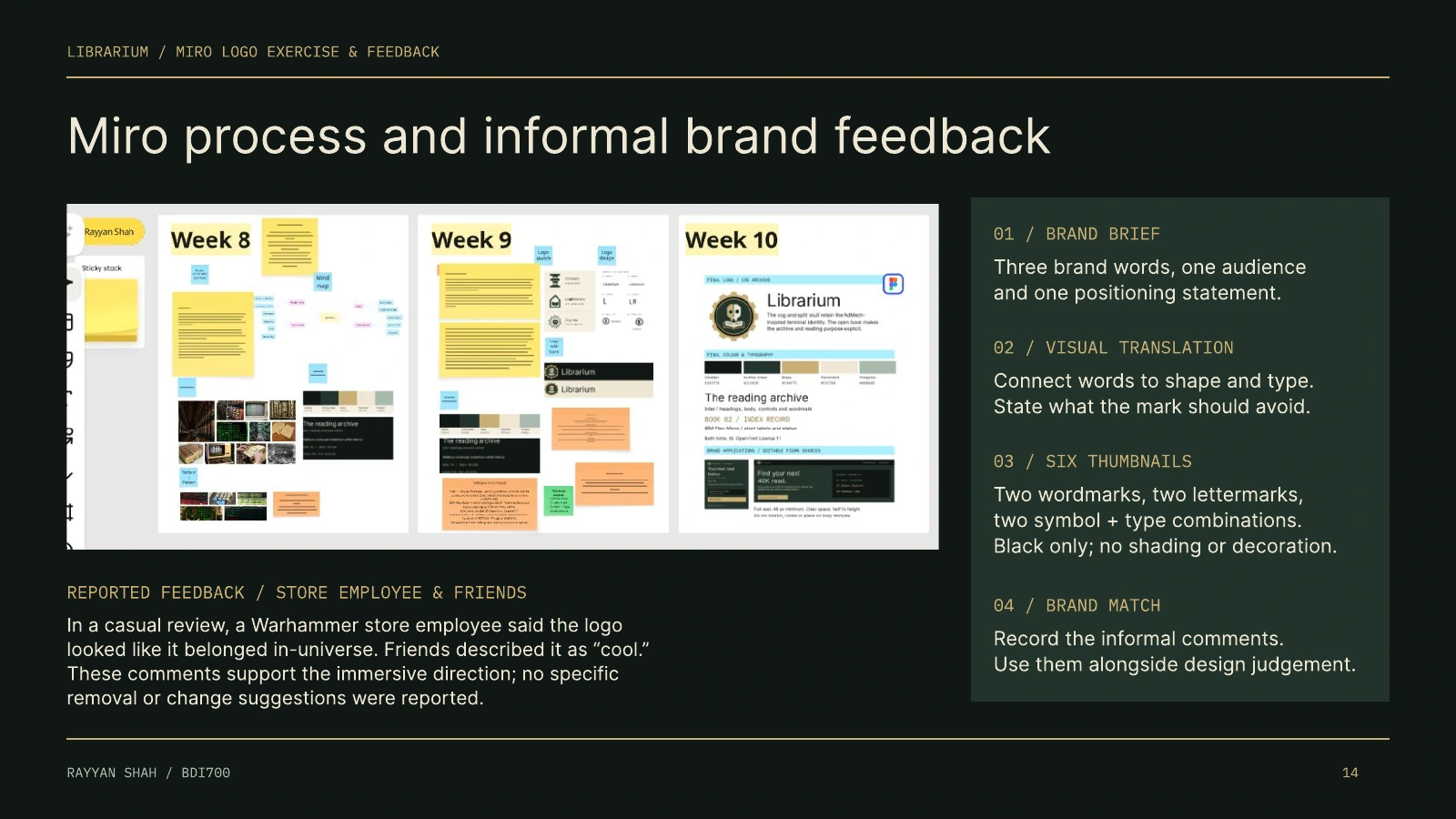
My initial IncludeLab concept was too broad. Moving to a single reading path made the problem and the prototype more concrete. Miro helped connect the reader’s starting point to the recommendation and saved-path screens.
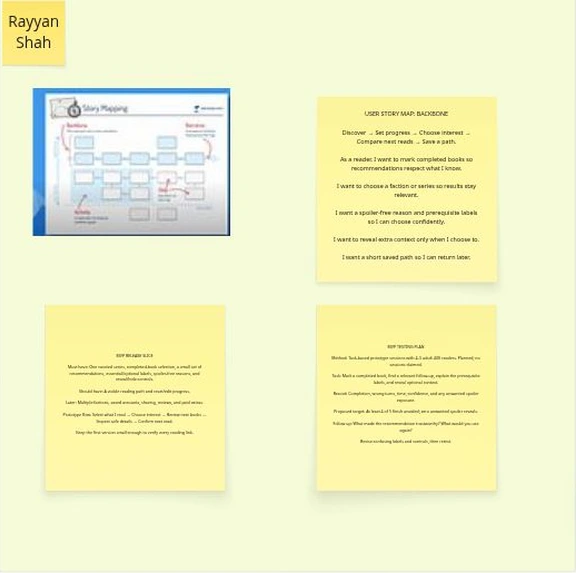
Feedback into decisions
A recommendation needs
a reason.
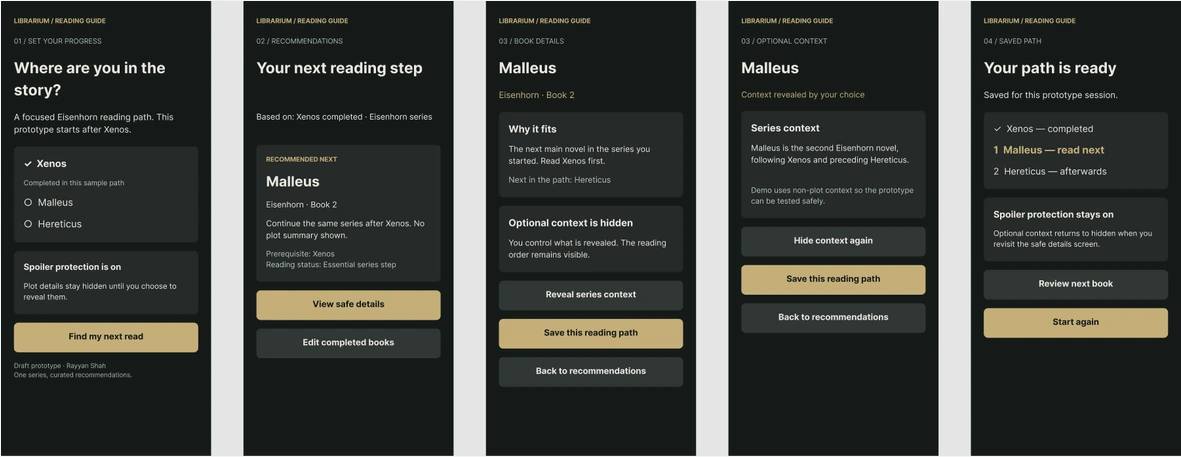
One early walkthrough with my brother surfaced gaps in the recommendation, reveal control, and saved state. I used this formative feedback to make the next action and its result more explicit.
| What surfaced | Design response | Purpose |
|---|---|---|
| The next book lacked a clear reason. | Added a spoiler-safe “Why it fits” explanation. | Connect the recommendation to the reader’s progress. |
| The spoiler setting was unclear. | Labelled the hidden state and named the reveal action. | Let the reader predict what opening the panel will do. |
| Saving lacked visible feedback. | Added a saved-path destination and session confirmation. | Make the result of saving easy to recognise. |
Visual identity
Atmosphere in the frame.
Clarity in the task.
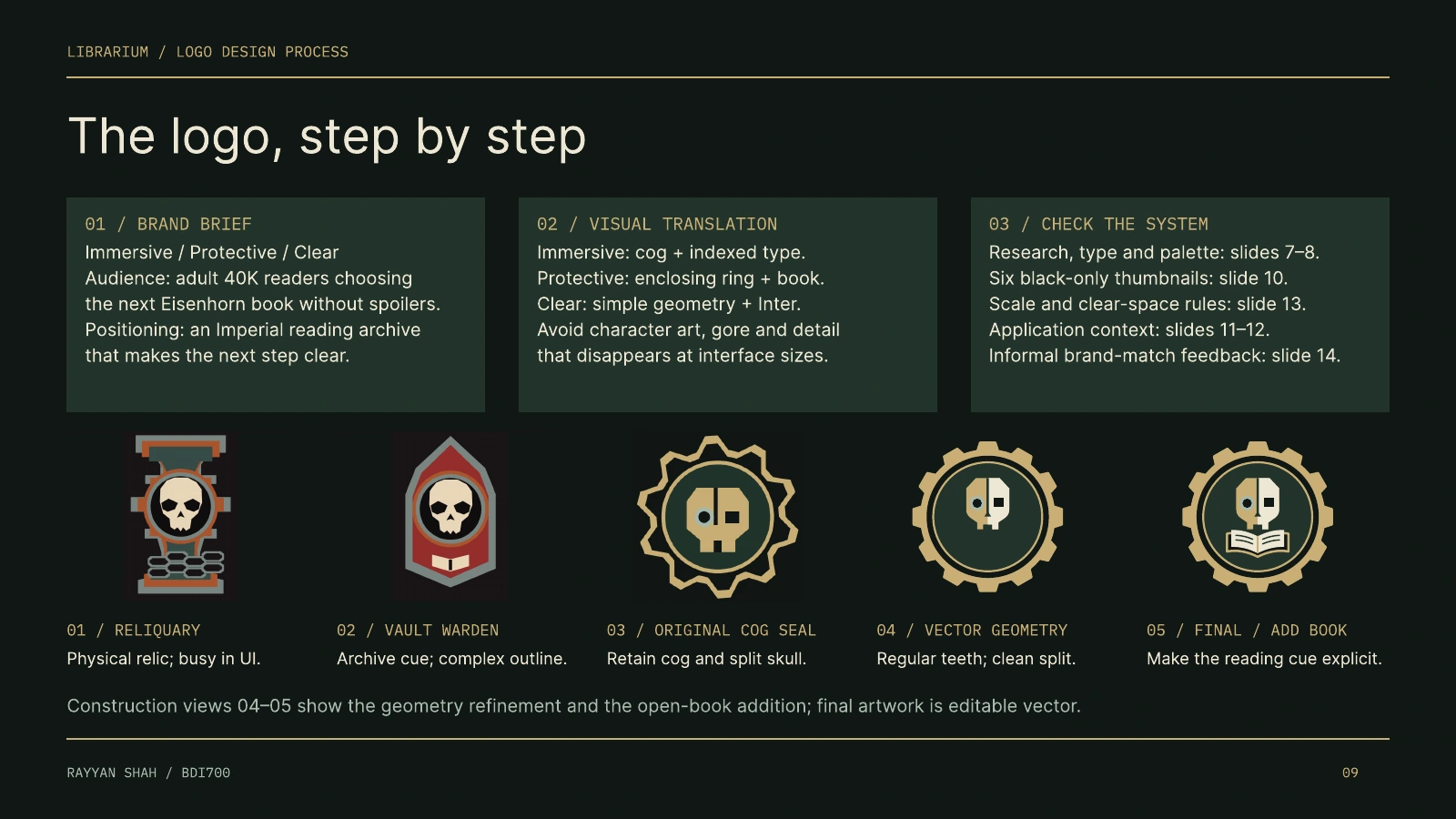
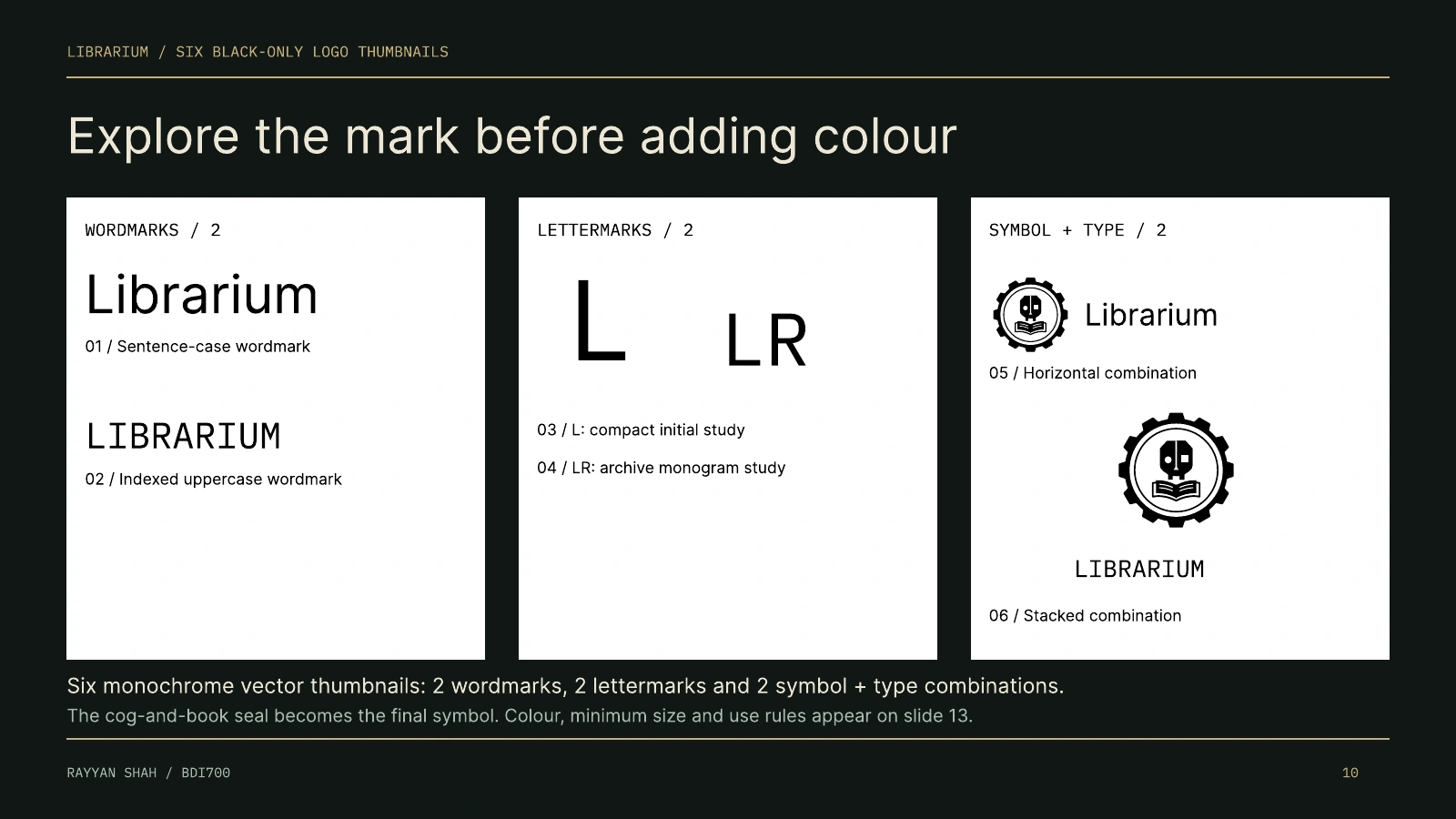
The updated identity uses a cog, split skull, and open-book seal to suggest an Imperial reading archive. Deep green surfaces and brass details carry the atmosphere, while clear type and familiar verbs support the task.

Obsidian · Archive green · Brass · Parchment · Phosphor
Immersive, still readable
Inter gives titles and body copy a clear, consistent voice. IBM Plex Mono adds short catalogue-style tags.
State beyond colour
Written labels explain when context is hidden and when the path has been saved.
From reliquary to reading archive
The logo process moves through reliquary and vault concepts into a simpler cog seal. Refining the geometry and adding the open book makes the reading purpose more explicit.
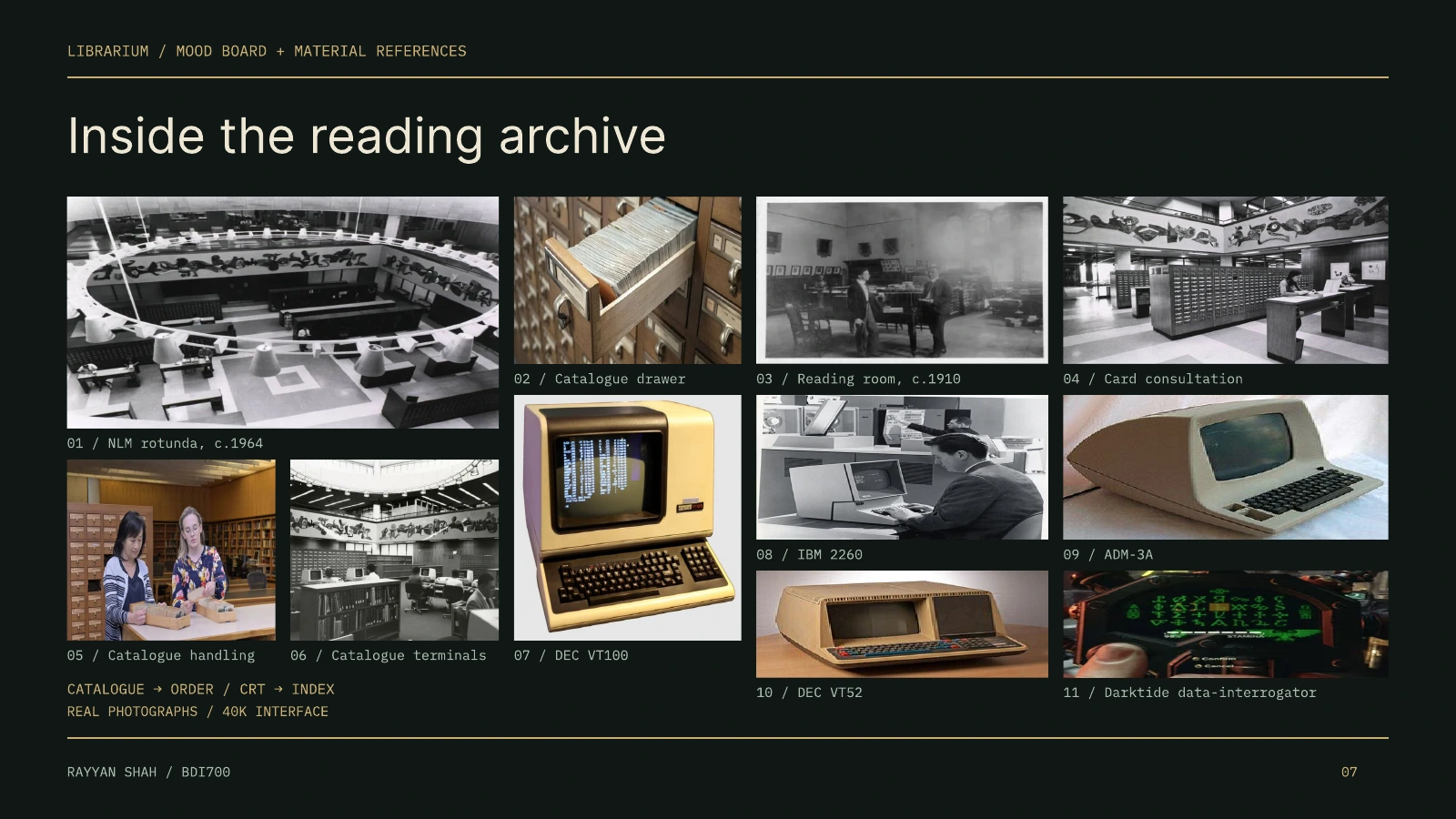
A mood board with a purpose
Archive rooms, catalogue furniture, and CRT terminals inform the material and interface language. Image references are credited in the presentation.
See the logo studies and development evidence
Try the interaction
One next book.
Your choice of context.
Follow the sample path from Xenos to Malleus. Reveal the optional context, save the reading path, and see the confirmation.
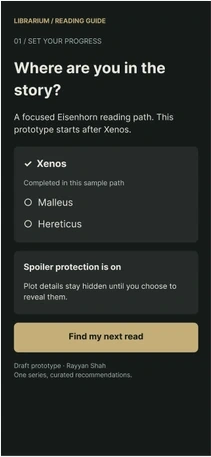
Where are you in the story?
This focused sample starts after Xenos.
- ✓ Xenos — completed
- Malleus — not yet read
- Hereticus — not yet read
Spoiler protection is on. Optional context stays hidden until you choose to reveal it.
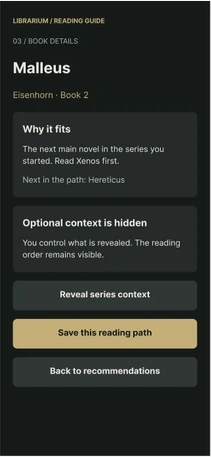
Malleus
Eisenhorn · Book 2
The next main novel in the series you started. Read Xenos first.
Next in the path: Hereticus.
You control what is revealed. The reading order remains visible.
Malleus continues the Eisenhorn series after Xenos and comes before Hereticus.
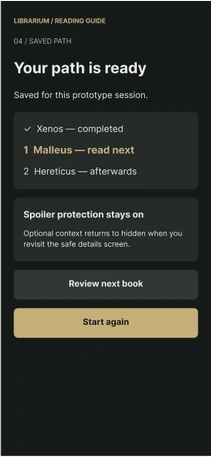
Your path is ready.
Saved for this session.
- ✓ Xenos — completed
- Malleus — read next
- Hereticus — afterwards
Spoiler protection stays on. Optional context returns to hidden when you revisit the details.
No path saved yet.
Choose your next read, then save the path to return to it during this session.
Interactive portfolio recreation based on the project screens. This sample uses a fixed reading path and non-plot context. Saving lasts for the current browser session.
Reflection
A strong theme needs
equally strong feedback.
The archive atmosphere gave the project its character. The walkthrough showed me that the interface also needed to explain its recommendations and make hidden and saved states unmistakable.
My next step would be testing with readers unfamiliar with the prototype: can they identify the next book, predict what a reveal will show, and find their saved path? I would use those observations to refine the language before expanding beyond one series.
View the updated presentation (PDF)